Classifying Errors by Failure Domain: What Quicken's Error Codes Taught Me About Distributed System Debugging
I didn't expect to learn anything about systems design from a personal finance app, but spending time untangling Quicken's error code mess turned out to be a decent exercise in thinking about failure domains — and it's a pattern that shows up constantly in distributed systems, not just legacy desktop finance software.
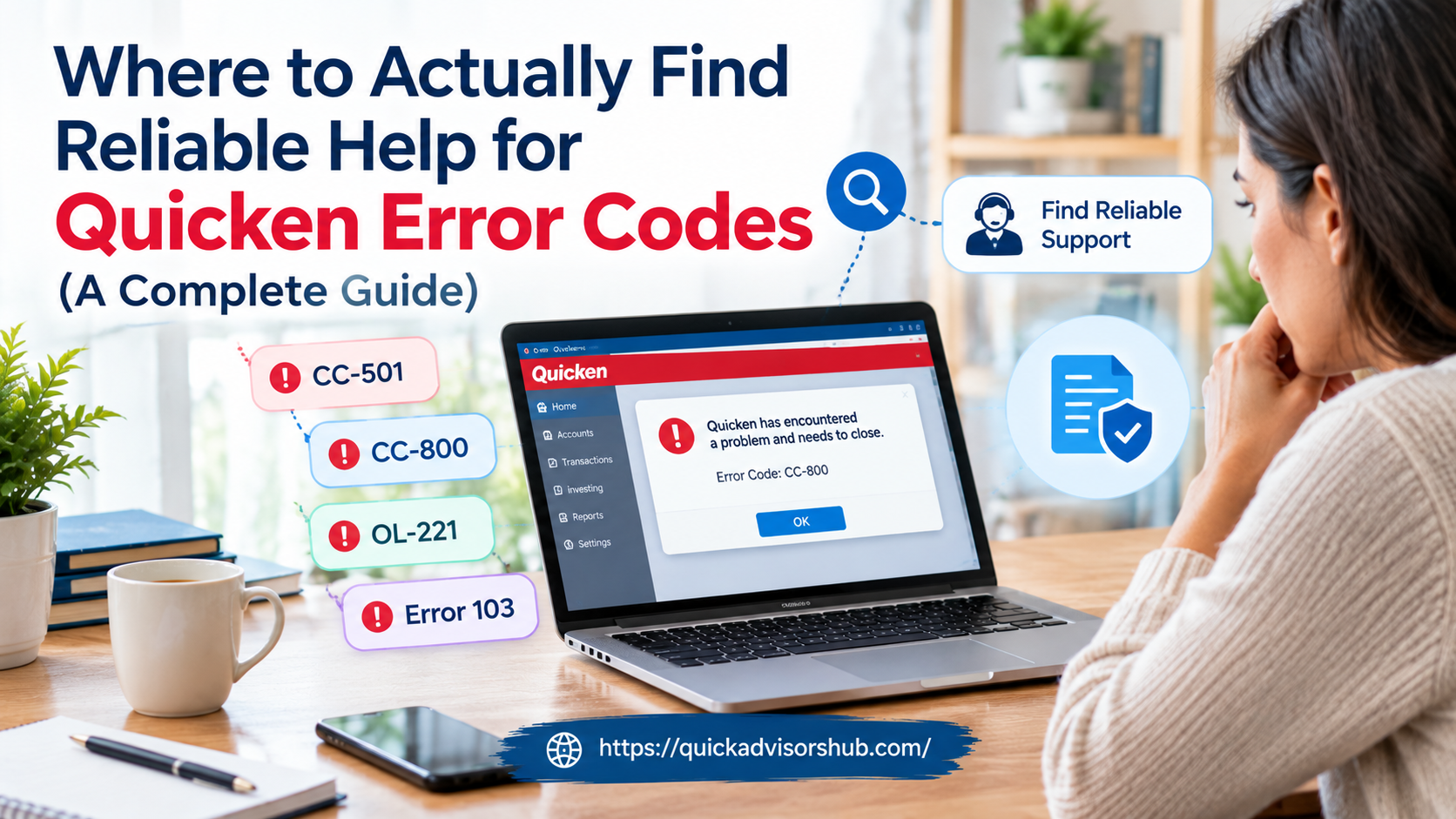
Here's the setup: Quicken throws dozens of distinct error codes, and on the surface they all look equally cryptic — strings like CC-501, OL-221, or a generic "file damaged" message that tells you nothing about severity or cause. My first instinct, like most people's, was to treat each code as its own isolated problem requiring its own lookup. That turned out to be the wrong mental model entirely.
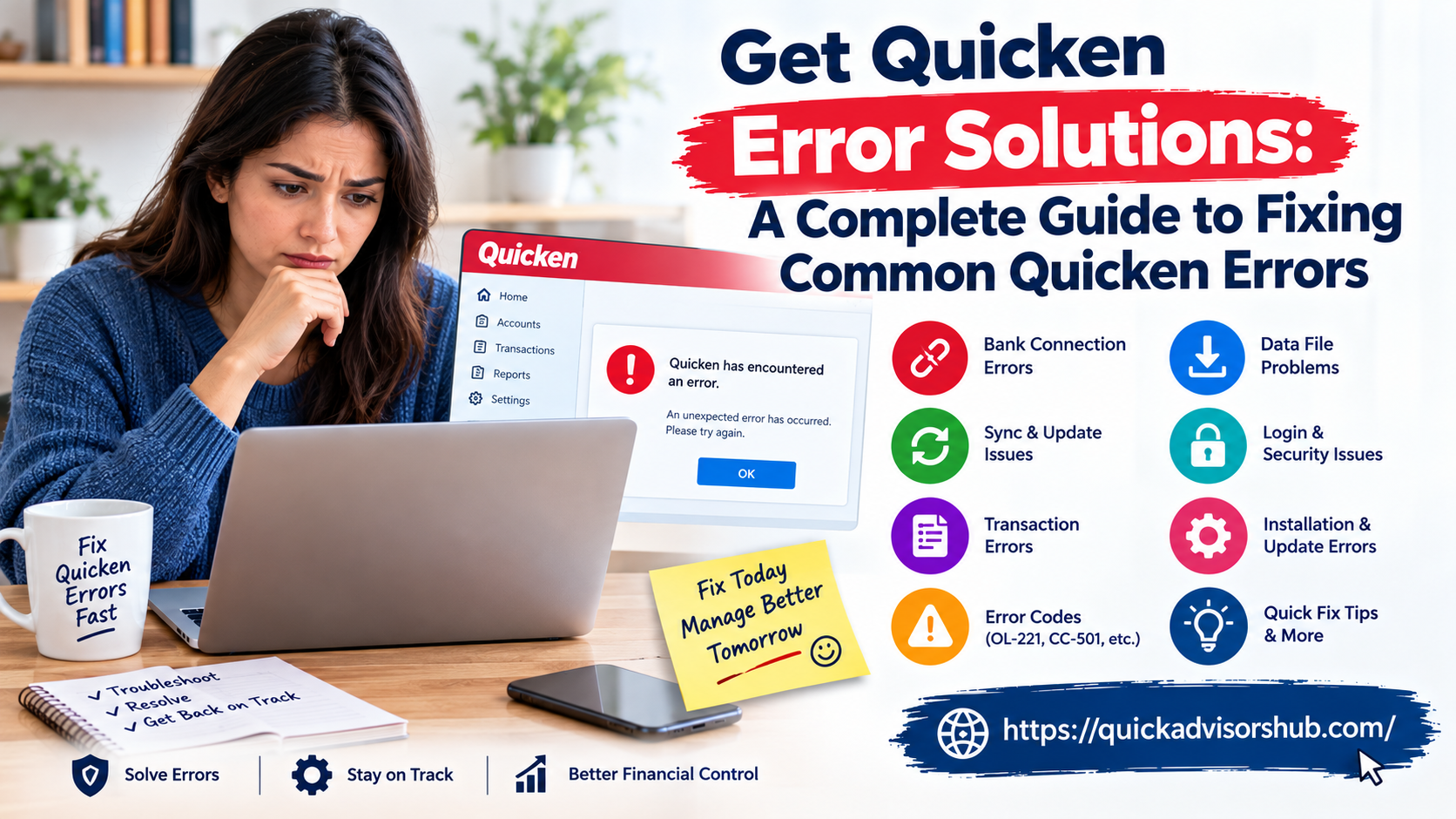
Once I actually mapped out where these errors originate, they collapse into four distinct failure domains, each corresponding to a different external dependency:
Domain 1 — the bank/aggregator boundary. This is where CC-xxx and OL-xxx codes live. Quicken doesn't talk to your bank directly — there's a financial data aggregator sitting in the middle, acting as a translation layer across dozens of different bank APIs. Any break here — a certificate rotation on the bank's side, an aggregator outage, a stale cached credential — surfaces as one of these codes. What's interesting is that the fix is almost always the same regardless of which specific code shows up: tear down the stored connection state entirely (deactivate), clear any cached auth, and rebuild the handshake from scratch (reactivate). Treating each CC/OL variant as needing its own unique fix is wasted effort — they're all symptoms of the same boundary failing in slightly different ways.
Domain 2 — local persistence layer. File corruption errors are a completely separate class, and conflating them with connection errors is a common mistake. These stem from interrupted writes, index corruption, or sync conflicts when a mobile/cloud sync client and the desktop client both think they own the latest state. The fix space here is also narrower than it looks: validate-and-repair as a first pass, restore-from-backup as the fallback. No amount of reactivating an online connection touches this domain, which is obvious once you see it mapped out but not obvious from inside a panic about a file that won't open.
Domain 3 — installation/update pipeline. Failures here are almost always environmental rather than logical — permission issues, antivirus interference, incomplete uninstalls leaving stale state behind. This is the most "ordinary software" category of the four, and standard clean-install discipline (full uninstall, fresh download, elevated permissions) resolves nearly all of it.
Domain 4 — the silent category. This is the one without error codes at all — sync mismatches that just manifest as wrong balances or duplicate transactions, with no alert raised. It's arguably the most dangerous domain precisely because nothing surfaces it; you only catch it by manually reconciling against ground truth (your actual bank statement). This mirrors a failure mode I've seen in event-driven systems generally — a silent double-write or out-of-order consumer doesn't throw, it just quietly produces wrong state until someone notices the numbers don't add up.
The broader takeaway, at least for me: error-code taxonomies are only useful once you map them back to failure domains rather than treating the code itself as the unit of diagnosis. A system that fails across four independent external boundaries (bank API, local storage, update pipeline, sync protocol) will always generate a long tail of distinct-looking codes that are really a small number of root failure modes wearing different costumes.
It's also a decent argument for why "recurring errors" are so diagnostically useful — if you clear an issue and it comes back, that's a strong signal the fix addressed the code rather than the domain. A credential that keeps re-expiring, a file validation that only partially cleared corruption, a sync conflict that regenerates itself every cycle — these all look like "the fix didn't work" but are actually "you fixed the symptom at the wrong layer."
Anyway, I ended up writing a longer, more exhaustive category-by-category breakdown for anyone actually dealing with these error codes day to day, but the failure-domain framing above is the part I found more broadly interesting.